
Plants
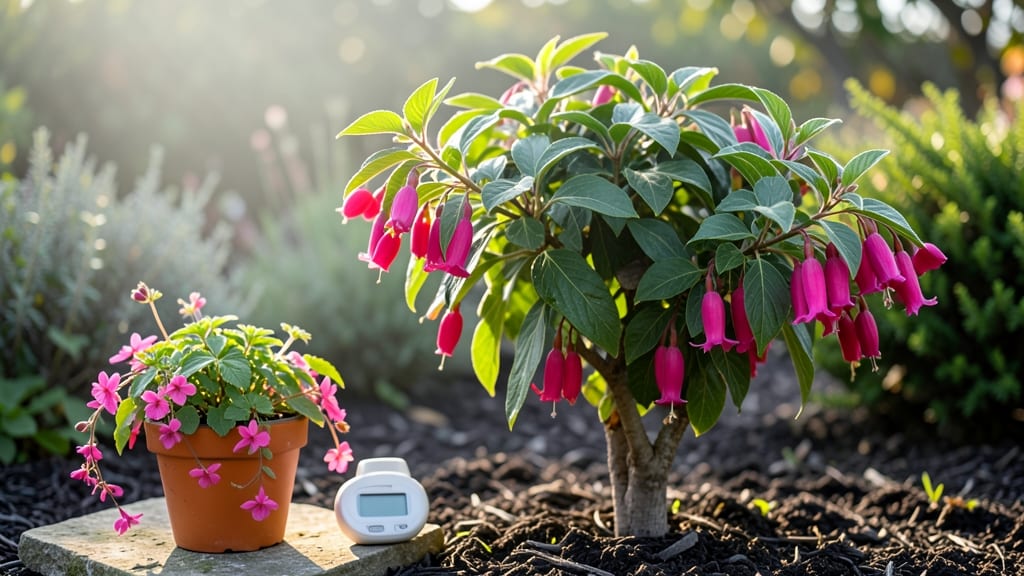
A fuchsia plant thrives in partial shade—morning sun with afternoon relief—where delicate blooms stay vibrant and leaves stay lush 🌸.
Your fuchsia plants may be thriving—or struggling—because of one simple factor: sunlight exposure. Too much sun scorches those stunning flowers, while too little shade leaves you with all leaf and no bloom. The balance is the key to keeping your fuchsia happy and flowering all season.
In USDA Zone 6a, where spring planting begins in April, fuchsias need protection from the harsh afternoon rays. A spot with dappled sunlight—like under a tree or on an east-facing porch—gives them just enough energy without the risk of leaf burn.
But what if you live in a hotter climate? The rules change, and I’ll show you how.
Below, I’ll break down how to spot light issues (yellowing leaves? leggy stems?) and adjust your fuchsia’s spot for bigger blooms and healthier growth. Whether you’re growing them in containers or in the garden, these tips will keep your fuchsias looking their best from July through October.
 Best Window Placement
How sunlight affects fuchsia bloom time vs. leaf health trade-offs
Fuchsias are stunning hanging plants with vibrant tubular flowers, but their light requirements create a delicate balance. Too much direct sunlight can cause leaf scorch and faded blooms, while insufficient light leads to leggy stems and sparse flowering.
Understanding this sunlight trade-off is key to maximizing both bloom time and leaf health.
The chlorophyll production process in fuchsias responds dramatically to light intensity. In partial shade, plants focus energy on leaf development and flower buds, while full sun exposure triggers stress responses like oxidative damage in delicate foliage.
This creates the classic gardener's dilemma: leafy but flowerless plants in shade or burnt blooms in excessive sun.
Here's how different light conditions impact fuchsias at a cellular level:
- Low light reduces photosynthetic efficiency, leading to pale leaves and weak stems
- Moderate light (2-4 hours daily) optimizes flower production while maintaining leaf vigor
- High light increases transpiration rates, causing wilting and leaf drop
| Light Condition | Bloom Time Impact | Leaf Health Impact | Ideal Varieties | Care Adjustments |
|---|---|---|---|---|
| Full Sun (6+ hrs) | Reduced bloom time Premature flower drop |
Leaf scorch Yellowing edges |
Hardy hybrids (e.g., 'Giant Mozart') |
Provide afternoon shade Increase watering |
| Partial Sun (3-4 hrs) | Optimal bloom duration Continuous flowering |
Deep green leaves Minimal stress |
Standard varieties (e.g., 'Lady Thatcher') |
Morning sun preferred Maintain consistent moisture |
| Partial Shade (2-3 hrs) | Delayed blooming Smaller flowers |
Healthy foliage Leggy growth |
Trailing types (e.g., 'Tom Thumb') |
Supplement with grow lights Prune for bushiness |
| Deep Shade (<2 hrs) | Minimal to no blooms Bud abortion |
Pale leaves Weak stems |
None recommended | Relocate immediately Increase light exposure |
The morning sunlight rule is crucial for fuchsias. East-facing windows or dappled shade from trees provide perfect light intensity without the midday heat stress that damages delicate petals. I've found that placing fuchsias where they receive 2-4 hours of morning sun followed by afternoon shade produces the best results.
For container-grown fuchsias, the pot size affects light requirements. Smaller containers dry out faster, so they need more shade protection to prevent root stress.
Larger containers can handle slightly more direct light because their moisture retention is better. Always use well-draining soil with organic matter to support this balance.
Seasonal adjustments are essential. In summer months, fuchsias need more shade protection as temperatures rise, while spring and fall allow for extended light exposure. I recommend moving potted fuchsias to shadier locations during peak afternoon sun (12 PM - 4 PM) to prevent leaf burn.
The leaf color is your best indicator of light balance. Healthy fuchsia leaves should be deep green with no yellowing or browning. When leaves develop yellow patches, it's often a sign of too much sun, while pale green leaves indicate insufficient light.
Regularly check both upper and lower leaves for these signs.
To maximize bloom time, consider these light-related tips:
- Rotate containers every few weeks to ensure even light exposure
- Use light-colored containers that reflect excess heat
- Prune leggy growth to encourage bushier, more productive plants
- Fertilize lightly during flowering periods to support bloom production
Remember that microclimates play a huge role. What works in your backyard garden might differ from your patio or balcony. Test different locations for 2-3 weeks before committing to a permanent spot. Your goal should be balanced growth—plants that produce both beautiful leaves and abundant flowers
Best light conditions for fuchsia plants by region & climate
Fuchsias thrive in partial shade, but their ideal light conditions vary dramatically by climate. In temperate zones, they love morning sun with afternoon shade, while tropical regions need filtered light to prevent scorching. Understanding these regional differences ensures your fuchsias bloom beautifully year-round.
Your local climate dictates how much sun your fuchsias can handle. For example, Mediterranean climates with hot, dry summers require morning sun only, while cooler Pacific Northwest gardens can tolerate more afternoon light. Let’s break down the best light strategies for each growing zone.
🌿
In temperate zones, fuchsias flourish with 2-4 hours of morning sun and afternoon shade. Place them near east-facing windows or under tall trees that allow filtered light. If growing in containers, rotate pots weekly to ensure even light exposure and prevent lopsided growth.
For tropical climates, avoid direct sun entirely—opt for bright indirect light under trees or on shaded patios. If your fuchsias start wilting or turning yellow, they’re getting too much heat. Use 30-50% shade cloth during peak sun hours to mimic their natural understory habitat.
🌸
In Mediterranean climates, where summers are hot and dry, fuchsias need morning sun only. By noon, move them to a shaded area or use temporary shade structures like umbrellas. Pair this with consistent watering to prevent leaf scorch, and mulch heavily to retain moisture.
If you’re in a cool maritime climate, like the Pacific Northwest, fuchsias can handle a bit more afternoon sun—up to 4-6 hours total. Choose south or west-facing locations, but protect them from harsh afternoon winds that can damage delicate blooms.
A simple windbreak made of bamboo or lattice works wonders.