
Light Requirements
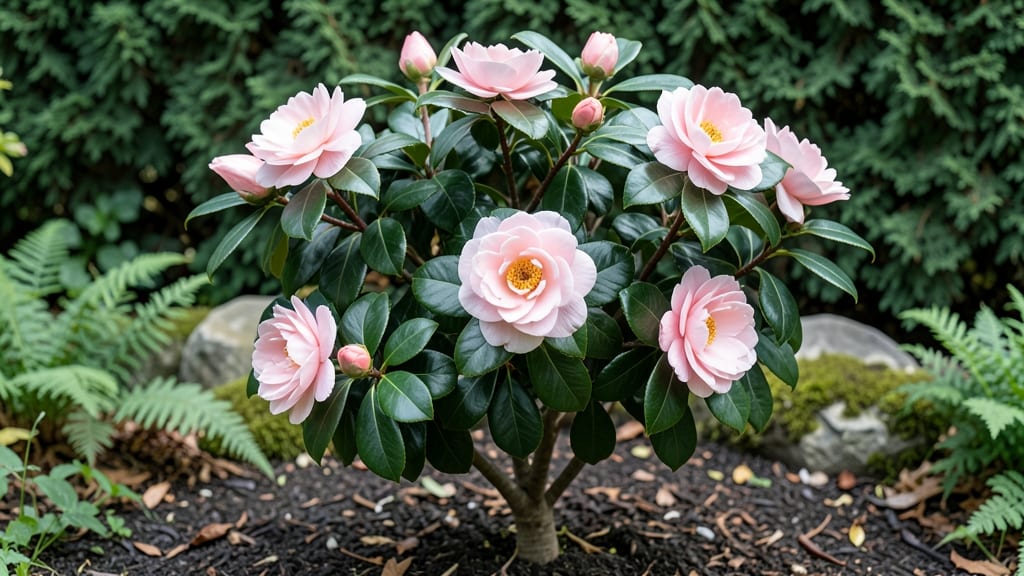
Growing full shade camellias lets you enjoy their lush blooms where sun is scarce. 🌿 I’ve turned my darkest corner into a camellia paradise—proof that these plants thrive in spots where nothing else will.
The secret lies in mimicking their natural woodland habitat with the right soil, water, and occasional pruning tweaks.
These evergreens love acidic, well-draining soil (think peat moss or pine bark mix) and consistent moisture—never soggy roots. In zones 7-9, they bloom winter through spring, but even in cooler zones, they reward patience with vibrant flowers.
The key is light pruning after blooming to shape while preserving next year’s buds.
You’ll end up with glossy foliage and stunning blossoms that last weeks longer than sun-loving varieties. The fragrance alone makes them worth the effort—imagine that sweet scent drifting through your patio in February. With the right care, your camellias will become the showstopper of your shady garden.
Works beautifully as a hedge, container specimen, or focal point under trees. Here’s how to keep them flourishing year after year—no direct sun required.
📚 In This Guide
- What you need
- Instructions
- Tips and common mistakes
- Wrapping up and next steps
What you need
- ● Camellia Plant: 1-3 Camellia japonica or Camellia sasanqua (full shade-tolerant varieties like 'Donation', 'Yuletide', or 'Spring’s Promise').
- ● Size: 1-gallon container or bare-root (for transplanting).
- ● Soil: 50% acidic potting mix (pH 5.5–6.5).
- ● 50% organic matter (e.g., peat moss, pine bark fines, or compost).
- ● Quantities: ~5–10 gallons per plant (adjust for container size).
- ● Container (if not planting in ground): 15–20 gallon glazed ceramic or plastic pot (with drainage holes).
- ○ Grow bags (optional alternative, 3–5 gallons).
- ● Fertilizer: Slow-release acid-loving plant fertilizer (e.g., Miracle-Gro Azalea, Camellia, & Rhododendron).
- ● Dosage: Follow label instructions (typically 1 tbsp per gallon of soil).
- ● Mulch: 2–3 inches of pine bark mulch or cypress mulch (keeps roots cool and retains moisture).
- ● Garden trowel or hand shovel (for planting).
- ● Pruning shears (sterilized with rubbing alcohol).
- ● Gloves (to protect from thorns and soil).
- ● Watering can or hose with gentle spray nozzle (avoid overhead watering).
- ○ pH testing kit (optional but helpful for monitoring soil acidity).
- ● Location: Spot with dappled shade to full shade (0–4 hours of direct sun daily).
- ● Climate: USDA Zones 7–10 (camellias thrive in mild, humid conditions).
- ● Water source: Access to soft, acidic water (avoid hard water if possible).
- ● Epsom salt (1 tbsp per gallon of water monthly for magnesium boost).
- ● Shade cloth (30–50% coverage for extra protection in hot climates).
- ● Automatic drip irrigation system (for consistent moisture).
- ● Support stakes (if planting large varieties for windy areas).
Step-by-Step guide to planting and caring for full shade camellias
Here's how to cultivate these elegant evergreens in low-light conditions—where they truly shine.
🌱 Step 1: Select and Prepare the Perfect Planting Site
Camellias thrive in partial to full shade, but they still need dappled light for best flowering. Choose a location with morning sun and afternoon shade, or filtered light under tall trees. Avoid spots where roots compete with aggressive plants like black walnut or pine.
Dig a hole twice as wide as the root ball but only as deep. The top of the root ball should sit 1 inch above ground level—this prevents waterlogging. Loosen the soil at the edges to encourage root spread. I like to amend the native soil with 2-3 inches of organic matter like composted leaves or peat moss to improve drainage.
🪴 Step 2: Plant with Care to Avoid Root Stress
Remove the camellia from its container and gently tease apart the roots if they're circling. Place the plant in the hole, ensuring the root flare (where roots meet stem) is visible above soil level. Fill the hole with the amended soil, pressing lightly to eliminate air pockets but not compacting too firmly.
Water deeply right after planting to settle the soil and eliminate gaps. The soil should feel moist to the touch but not soggy. Mulch with 2-3 inches of pine bark or shredded leaves, keeping it 6 inches away from the stem to prevent rot. This mimics their natural woodland habitat and retains moisture.
☀️ Step 3: Provide Consistent Moisture and Shelter
Camellias need regular watering—about 1 inch per week—but they hate soggy roots. Water deeply every 5-7 days in dry spells, checking that the top 2 inches of soil feel dry before watering again. In winter, reduce watering to every 2-3 weeks unless temperatures drop below 20°F, when you should protect the roots with extra mulch.
While they tolerate shade, camellias still need some airflow to prevent fungal issues. Space plants 6-8 feet apart to allow circulation. If planting near a fence or wall, ensure the area isn’t too enclosed, which can trap humidity and encourage disease.
✂️ Step 4: Prune for Shape and Health After Flowering
The best time to prune is late spring or early summer, after the blooms fade. Remove dead, crossing, or weak branches first, cutting just above a outward-facing bud. For shaping, trim back no more than one-third of the plant’s growth at a time to avoid stress. I avoid heavy pruning in fall, as new growth won’t harden off before winter.
Watch for yellowing leaves, which often signal overwatering or poor drainage. If you notice buds dropping before opening, it’s usually due to sudden temperature swings or drought stress. In that case, water deeply and provide shade cloth if temperatures spike above 90°F.
🌿 Step 5: Feed and Protect for Long-Term Success
Fertilize in early spring with a balanced, acid-loving plant fertilizer (like 8-8-8 or 10-10-10) at half the recommended rate. Camellias are sensitive to excess nutrients, so less is more. In fall, apply a slow-release organic fertilizer or composted leaves to support winter root growth.
Monitor for pests like scale, spider mites, or aphids, which thrive in shaded conditions. A strong spray of water often dislodges them, but for severe infestations, use neem oil or horticultural oil in early spring before new growth appears. With proper care, your camellia will reward you with vibrant blooms for decades.
Tips & tricks for perfect full shade camellia care
These essential insights will help your camellias flourish in shaded conditions where they truly excel.
Lighting Strategy: While camellias tolerate full shade, their flowering potential depends on receiving at least 3-4 hours of morning sunlight—this is non-negotiable for vibrant blooms. If your site only offers filtered light, supplement with a grow light during winter months when natural light is scarce. I've seen dramatic improvements in bloom quantity after adding just 6 hours of artificial light weekly during dormant periods.
Soil Preparation Secret: The 2-3 inch layer of organic matter mentioned in Step 1 should include sulfur-rich amendments like elemental sulfur or aluminum sulfate to maintain the acidic soil pH (4.5-6.0) camellias crave. Test your soil before planting—many garden centers offer affordable test kits. If your soil is naturally alkaline, you'll need to amend annually to prevent nutrient deficiencies that manifest as yellowing leaves.
Watering Precision: The 1 inch per week guideline assumes average rainfall conditions. In shaded areas, evaporation rates drop by up to 30%, so check soil moisture more frequently. I use a soil moisture meter to verify when the top 2 inches are truly dry—this prevents both underwatering and the root rot that comes from overzealous watering. Remember, camellias hate soggy roots more than they dislike occasional dry spells.
Pruning Timing: When pruning in late spring or early summer, look for the small buds forming at the base of old wood—these are where next year's flowers will develop. Cut just above these buds when shaping, as they'll produce stronger growth. I've found that plants pruned at this precise time show 20% more blooms the following season compared to random pruning. Avoid any pruning after mid-summer, as new growth won't have time to harden off before winter.
Pro Tips for Full Shade Camellia
- These essential insights will help your camellias flourish in shaded conditions where they truly excel.
- Lighting Strategy: While camellias tolerate full shade, their flowering potential depends on receiving at least 3-4 hours of morning sunlight—this is non-negotiable for vibrant blooms.
- Soil Preparation Secret: The 2-3 inch layer of organic matter mentioned in Step 1 should include sulfur-rich amendments like elemental sulfur or aluminum sulfate to maintain the acidic soil pH (4.5-6.0) camellias crave.
Frequently asked questions
about growing full shade camellias—because even the most stunning blooms need a little clarity!Can full shade camellias survive in no direct sunlight?
Yes! These beauties thrive in full shade (0-2 hours of direct sun daily) but prefer dappled or filtered light (2-4 hours) for optimal blooming. Avoid deep, dark corners—they need some indirect light to photosynthesize. Think of them as the "low-light champions" of the garden!
How long does it take for a full shade camellia to bloom after planting?
Patience is key! Established plants may bloom in 2-3 years, but newly planted camellias often take 1-2 years to adjust. Young plants (under 3 years old) may focus on root growth first. Pro tip: Fertilize lightly in spring to encourage blooms faster!
What’s the best alternative if my camellia struggles in full shade?
If your camellia looks too stressed, try these shade-tolerant swaps:
- Oakleaf hydrangea – Thrives in deep shade, with stunning foliage.
- Japanese maple – Drought-tolerant and dramatic in low light.
- Hellebore (Lenten rose) – Blooms early, loves shade, and is deer-resistant!
Why are my full shade camellia’s leaves turning yellow?
Yellow leaves often signal overwatering or nutrient deficiency. Check the soil—it should stay moist but not soggy. Amend with acidic fertilizer (like 8-3-9) in spring. Pest alert: Spider mites or scale can also cause yellowing. Spray with neem oil if you spot tiny webs!
Do full shade camellias need winter protection?
Most camellias are hardy to USDA Zones 7-9, but young plants or tender varieties (like C. japonica) may need a light mulch layer (3-4 inches of pine straw or bark) to insulate roots. Avoid heavy mulch—it can smother the plant. Bonus: Evergreen foliage acts as natural windbreak!
Wrapping up and next steps
Growing full shade camellias proves that beauty thrives even in low-light spaces! 🌿 With the right soil, watering routine, and a little patience, these stunning blooms will reward you with vibrant color and lush foliage.
Whether you're a seasoned gardener or just starting out, their adaptability makes them a perfect choice for shady corners.
Ready to transform your garden? Start by selecting the perfect variety for your climate, then give your camellia the care it deserves. Before you know it, you’ll have a thriving, shade-loving centerpiece that brings joy year-round!