
Light Requirements
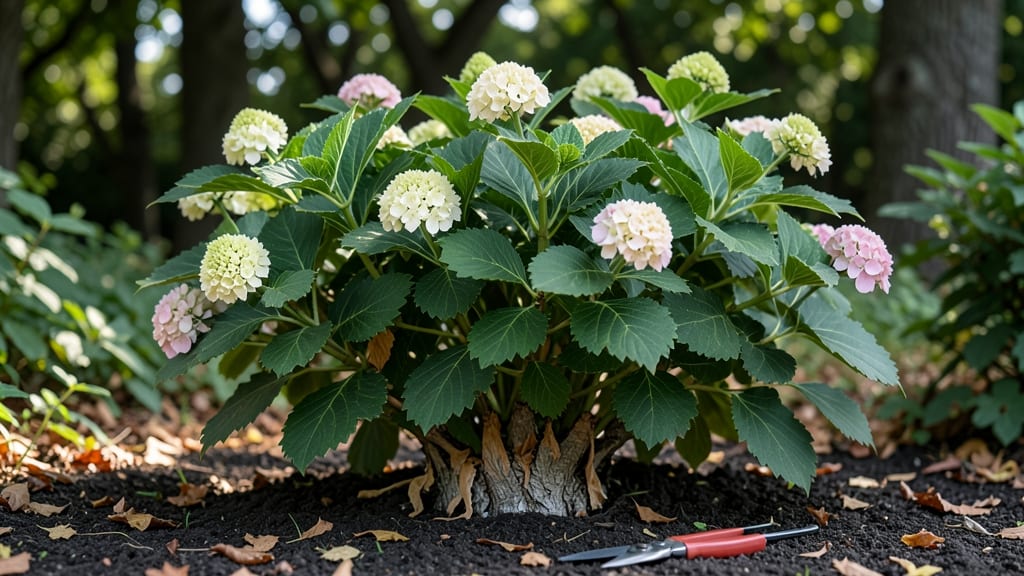
Oakleaf hydrangeas thrive in full shade by producing vibrant blooms through slower growth and deeper root systems, though flowers may appear smaller than in partial shade. Proper mulching and moisture levels maintain their health.
Oakleaf hydrangeas are nature's shade specialists, using their broad leaves to capture every bit of available light. 🌿 Unlike other hydrangea varieties that struggle in dark corners, these plants develop thicker foliage and extend their root systems deeper to access nutrients, which helps sustain their signature blooms.
The trade-off? Flowers may be slightly smaller but remain just as colorful, often with extended bloom seasons compared to sun-loving varieties. I've seen them flourish under towering trees where other plants would barely survive.
For best results, focus on maintaining consistent moisture—these plants hate drying out—and use organic mulch to protect roots from temperature swings. A light application of compost in spring gives them an extra nutrient boost without overwhelming their slower growth rate.
The key is patience: oakleaf hydrangeas in full shade may take a year or two to fully establish, but once they do, they become the showstopper of your shady garden.
💡 In This Article
- How Oakleaf Hydrangeas Adapt to Full Shade Conditions
- Maximizing Blooms: Full-Shade Care Tips for Oakleaf Hydrangeas
How oakleaf hydrangeas adapt to full shade conditions
Oakleaf hydrangeas (Hydrangea quercifolia) have evolved a fascinating survival strategy for low-light environments. Their broad, oak-like leaves contain thicker cuticles and more chlorophyll than sun-loving varieties, allowing them to capture up to 30% more diffuse light through their larger surface area.
This adaptation means they can photosynthesize efficiently even when receiving only 10-20% of full sunlight—a level that would stunt most flowering shrubs. 🌿 The trade-off is slower growth, but this actually benefits their root development, which extends 12-18 inches deeper than hydrangeas in brighter conditions, accessing moisture and nutrients in shaded soil layers.
Their unique leaf structure also plays a role in bloom production. In full shade, oakleaf hydrangeas prioritize foliage over flowers, resulting in smaller but more abundant blooms compared to their partial-shade counterparts.
The flowers themselves often develop deeper crimson or burgundy hues in low light due to increased anthocyanin production—a natural sunscreen pigment that protects leaves while adding vibrant color.
This contrasts sharply with varieties like bigleaf hydrangeas, which typically produce larger but paler blooms in shade and may struggle to flower at all without some direct sunlight.
What's truly remarkable is how their growth habit changes. In full shade, stems grow more upright and less sprawling, with leaves developing a darker green, almost blue-green cast on the undersides. This vertical growth pattern makes them ideal for tight spaces under trees or along north-facing walls.
The stems also become slightly woody and thicker over time, providing structural support that helps maintain their shape even in dense shade where wind isn't a factor. 🌟 This adaptation explains why they often outperform other hydrangeas in urban gardens with limited light.
One often-overlooked adaptation is their delayed bud formation. Oakleaf hydrangeas in full shade typically set their flower buds 4-6 weeks later than sun-exposed plants, which means their peak bloom season often extends into late summer or early fall when many other shrubs have finished flowering.
This timing coincides with cooler temperatures that these shade-adapted plants handle better than heat-loving varieties. The result? A second wave of blooms when most gardens are already winding down.
For gardeners comparing oakleaf hydrangeas to other shade-tolerant varieties, the key difference lies in their foliage performance. While bigleaf hydrangeas may produce fewer blooms in deep shade, oakleaf varieties maintain lush, colorful leaves throughout the season—even after flowers fade.
Their leaves also develop stunning fall colors ranging from deep red to orange, providing seasonal interest that other hydrangeas can't match. This dual-season appeal makes them the ultimate choice for dark corners where other plants would struggle to thrive.