
Light Requirements
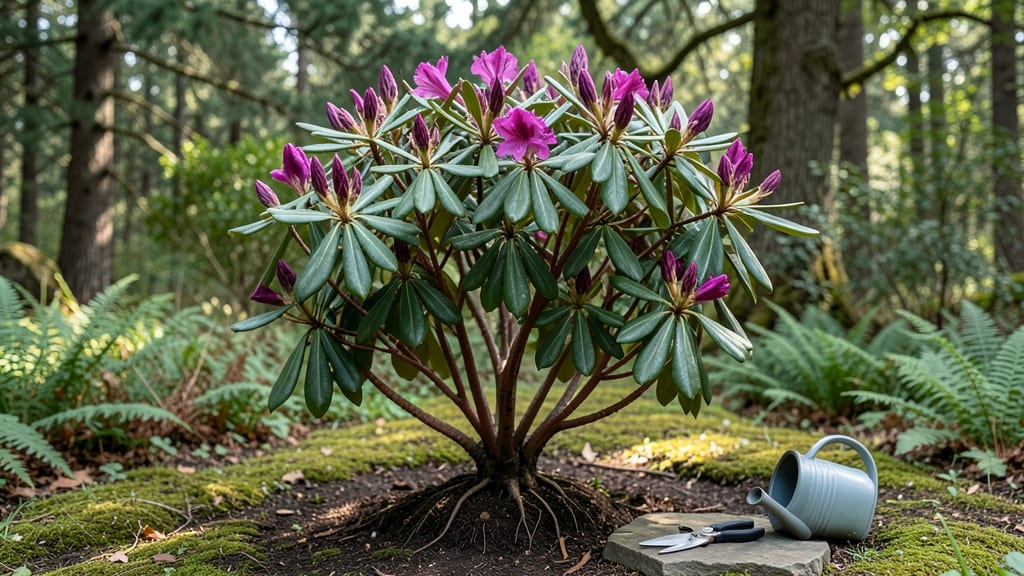
Rhododendrons in full shade grow best with varieties like 'Nova Zembla' and 'PJM' that handle low light, though they still need acidic soil (pH 4.5-5.5), steady moisture, and shelter from late-season sun exposure. Adding mulch keeps roots cool and retains essential humidity.
Shade-loving rhododendrons actually benefit from filtered light, which prevents leaf scorch while still supporting photosynthesis. 🌿 The key is choosing the right cultivars—some, like 'Nova Zembla,' produce stunning blooms even under tree canopies, while others may require slightly brighter conditions to thrive.
I’ve found that consistent moisture is more critical than sunlight for these plants, especially during their first two years of establishment.
For gardeners with dark corners, consider Catawbiense Grandiflorum, which boasts large, fragrant flowers even in deep shade. Just remember: while these varieties tolerate low light, they still need well-draining, acidic soil.
A 2-3 inch layer of pine bark mulch works wonders for maintaining the right moisture levels and temperature balance.
💡 In This Article
- How Light Affects Rhododendron Growth in Shaded Gardens
- Top Full-Shade Rhododendron Varieties for Dark Corners
How light affects rhododendron growth in shaded gardens
Rhododendrons adapt their growth patterns based on available light through a process called photosynthetic acclimation. In full shade, these plants develop thicker, darker leaves with increased chlorophyll content to maximize light absorption. This adaptation allows them to thrive under 20-50% sunlight (compared to sun-loving varieties that need 60-80% sunlight).
The trade-off? Shade-grown rhododendrons often produce slightly smaller flowers and grow more slowly, as their energy focuses on leaf development rather than blooming.
The root system also responds dramatically to low light. Shade-tolerant varieties like 'PJM' develop more extensive, shallow root networks to efficiently capture nutrients and water from the topsoil layer.
This adaptation explains why they're more vulnerable to drought stress in shaded areas - their roots can't penetrate deeply like sun-loving varieties. 🌱 What's fascinating is how these roots produce more ectomycorrhizal fungi (beneficial soil partners) in shaded conditions, which help them access phosphorus more efficiently in nutrient-poor shaded soils.
Flowering intensity provides the most visible evidence of light deprivation. In full shade, rhododendrons may produce 20-30% fewer blooms compared to their sun-exposed counterparts, but the flowers often last longer due to reduced heat stress.
The key mechanism here is photoperiodism - these plants need a minimum light exposure to trigger flowering hormones. Varieties like 'Nova Zembla' have adapted by developing more efficient light-capturing pigments that work even under 10,000 lux (about 1/10th of full sunlight).
Leaf quality also suffers in extreme shade. Without sufficient light, rhododendrons produce less chlorophyll, leading to paler leaves that are more susceptible to fungal diseases. This is why gardeners often notice yellowing or spotting on lower leaves - the plant is essentially starving for light.
The good news? Proper mulching with 2-3 inches of organic matter can improve soil temperature and microbial activity, partially compensating for the light deficit by enhancing nutrient availability.
What most people don't realize is how late-season sun exposure becomes a bigger threat than shade itself. While rhododendrons tolerate full shade, they can suffer sunburn when sudden afternoon sun hits their leaves after months of shade.
This explains why gardeners in mixed-light areas need to monitor afternoon sun patterns carefully. The ideal scenario is morning sun with afternoon shade, which provides enough light for photosynthesis without risking heat stress.
Consider this comparison: A sun-loving rhododendron like 'Roseum Elegans' might produce 300-400 flowers per plant in full sun, while a shade-tolerant 'Catawbiense Grandiflorum' might only produce 150-200 flowers in full shade - but those flowers will be larger and last 2-3 weeks longer.
The trade-off between quantity and quality is what makes shade-grown rhododendrons so rewarding for patient gardeners.