
Shrubs
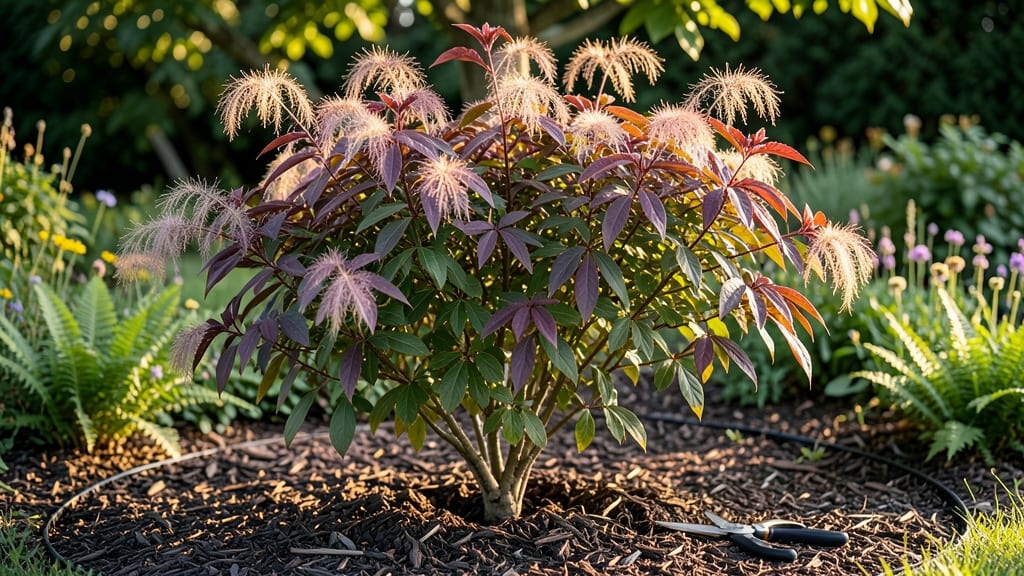
The smoke bush thrives in sun or shade 🌿 — its secret to stunning foliage lies in understanding how light shapes its growth, color, and resilience.
Struggling to keep your smoke bush (Cotinus) thriving with inconsistent sunlight? You’re not alone. Many gardeners assume these shrubs need full sun, but they’re far more adaptable than you’d think.
Whether your yard is bathed in golden afternoon rays or tucked under towering trees, this shrub can deliver that signature smoky purple haze—with the right care.
In full sun, smoke bushes grow taller and more vibrant, but they’ll also handle partial shade like a pro, especially in hot climates where afternoon heat can stress leaves. The key? Balancing light exposure with soil moisture and pruning to keep foliage lush year-round.
Below, I’ll break down the science of sun vs. shade for smoke bushes, plus practical hacks to maximize their beauty in any spot.
From choosing the right variety for your light conditions to adjusting watering and pruning, you’ll learn how to turn your smoke bush into a low-maintenance star—no matter where it lives in your landscape.
 Best Window Placement
How sunlight affects smoke bush growth and foliage color
Your smoke bush (Cotinus) thrives on sunlight, but its foliage color and growth patterns shift dramatically based on light exposure. Understanding these differences helps you choose the perfect spot for vibrant purple hues and lush plume-like foliage.
Let’s break down how full sun, partial shade, and deep shade transform this stunning shrub.
In full sun (6+ hours/day), smoke bushes develop their most intense purple or magenta foliage, especially in varieties like ‘Royal Purple’. The leaf density remains thick, and the plume clusters grow fuller, creating a dramatic focal point.
However, in hot climates (USDA Zones 7-9), afternoon shade prevents leaf scorch while preserving color vibrancy.
In partial shade (3-6 hours/day), smoke bushes adapt by producing lighter green or lavender tones, though they still grow well. The height and spread may be slightly reduced, but the foliage stays dense. This is ideal for urban gardens or north-facing yards where direct sun is limited.
Deep shade (<3 hours/day) weakens color intensity and growth vigor, often resulting in pale green leaves and sparse plumes. While smoke bushes survive in shade, they struggle to reach their full ornamental potential. If your yard is shady, opt for shade-tolerant varieties like ‘Grace’, which handles low light better.
| Light Condition | Foliage Color | Growth Pattern | USDA Zone Adaptability |
|---|---|---|---|
| Full Sun (6+ hrs) | Deep purple/magenta | Tall (6-10 ft), dense plumes | Zones 5-9 (with afternoon shade in Zone 9) |
| Partial Shade (3-6 hrs) | Lavender-green | Moderate (4-7 ft), slightly sparse plumes | Zones 4-8 (best for cooler climates) |
| Deep Shade (<3 hrs) | Pale green | Stunted (3-5 ft), thin foliage | Zones 5-7 (not recommended) |
For optimal foliage color, place your smoke bush in morning sun + afternoon shade, especially in hot zones (8-9). This balances color intensity with leaf health. In cooler zones (4-6), full sun is ideal year-round, as shade reduces winter hardiness.
Light intensity also affects pruning needs. Sun-exposed bushes grow faster, requiring annual pruning to maintain shape, while shade-grown plants may need less frequent trimming. Always prune after flowering to avoid cutting off next year’s colorful foliage.
If your smoke bush isn’t showing its signature purple hues, it may need more light. Gradually introduce 2-3 extra hours of sun over 2-3 weeks to avoid leaf stress. Conversely, if leaves are scorched, move it to dappled shade with a lightweight shade cloth (30-50%) during peak afternoon heat.
In USDA Zone 6a, where many gardeners grow smoke bushes, spring planting in full sun yields the best results. Amend soil with compost to improve drainage, as soggy roots in shade can lead to root rot. Mulch with wood chips to retain moisture and regulate soil temperature.
Pro tip: Use reflective surfaces like white gravel or light-colored walls to bounce extra light onto shade-loving smoke bushes. This trick boosts color vibrancy without direct sun exposure. Pair with sun-loving perennials like black-eyed Susans to create a dynamic landscape contrast.
Remember, smoke bushes are drought-tolerant once established, but their foliage color fades faster in dry shade. Water deeply once a week during establishment (first year), then reduce to every 2 weeks in mature plants. The key to stunning smoke bushes? Balance light, soil, and water for year-round drama.
Proven light-tolerance hacks for smoke bush in different climates
Your smoke bush (Cotinus) can thrive in nearly any light condition—but its foliage intensity and growth vigor depend heavily on where you plant it. In urban gardens with limited sun or hot Southern climates, adapting your care routine makes all the difference.
Let’s explore climate-specific strategies to keep your smoke bush vibrant, whether it’s basking in full sun or tucked into shady corners.
In the Pacific Northwest, where partial shade dominates, smoke bushes often develop lighter foliage but remain healthy with proper soil prep. Meanwhile, in Southern US zones, afternoon shade protects leaves from heat scorch while maintaining deep purples.
The key? Adjusting pruning schedules, companion plants, and soil amendments to match your local light conditions.
- 🌿 Pacific Northwest: Plant in morning sun with afternoon shade to prevent fungal issues from humidity. Use mulch to retain moisture.
- ☀️ Southern US: Provide dappled shade in peak afternoon heat (2–4 PM). Water deeply twice weekly to combat drought stress.
- ✂️ Pruning Tip: Trim spent blooms in early spring to encourage new growth. Avoid heavy pruning in low-light spots to maintain leaf density.
- 🪴 Companion Plants: Pair with Russian sage (drought-tolerant) or heuchera (shade-friendly) to improve soil and light balance.
- 💧 Soil Hack: Amend clay soil with compost + perlite (1:1 ratio) to improve drainage in shady areas.
For urban gardens with north-facing yards, focus on soil fertility to compensate for low light. A balanced fertilizer (10-10-10) applied in early spring boosts foliage color, while organic matter like worm castings improves root health.
In these spots, ‘Grace’ smoke bush often outperforms others due to its shade tolerance.
In full-sun locations, like Southern US landscapes, prioritize watering efficiency to prevent leaf burn. Drip irrigation systems deliver moisture directly to roots, reducing evaporation. Pair this with reflective mulch (like white gravel) to bounce light onto lower leaves, enhancing purple hues.
Regardless of climate, prune strategically: Cut back one-third of old growth in late winter to make room for new, sun-loving shoots. In shady spots, avoid over-pruning—this shrub relies on existing foliage to photosynthesize efficiently. For heat-prone areas, prune after summer to reduce stress.
With these light-tolerance hacks, your smoke bush will reward you with year-round color, whether it’s thriving in bright city light or flourishing in woodland shade. Experiment with placement and care to find what works best for your unique garden! 🌳