
Light Requirements
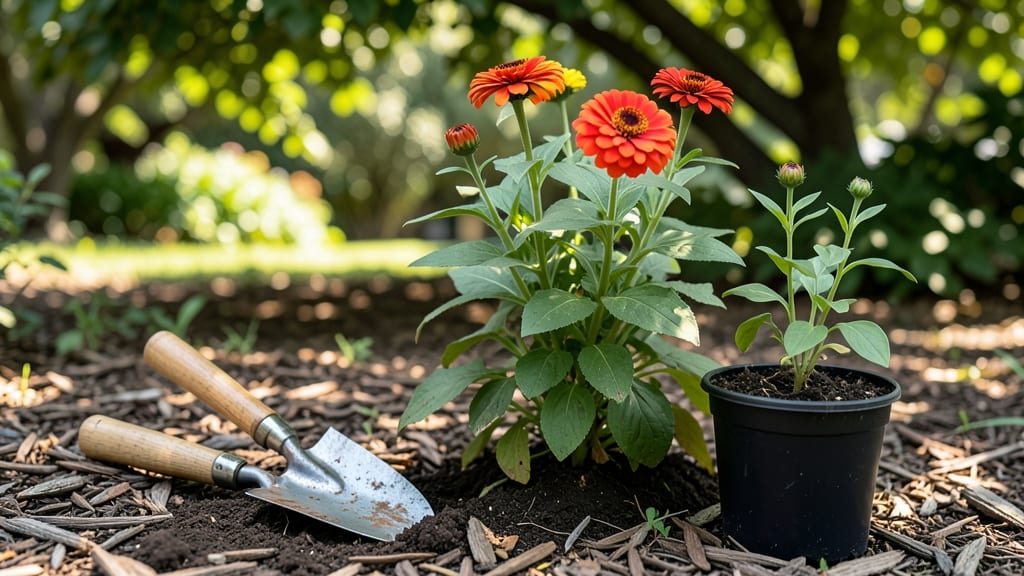
Zinnias can grow in part shade but may produce fewer blooms and taller, leggier stems compared to full sun. Choose shade-tolerant varieties like 'Benary’s Giant' or 'Profusion' for better results in low-light areas.
Part shade works for zinnias, but the trade-off is noticeable—your plants will stretch toward any available light, creating thinner stems that may flop over without support. 🌿 The key is selecting varieties bred for lower light conditions, like the compact 'Thumbelina' series or 'Crystal' hybrids, which handle partial shade better than standard types.
Even with shade-tolerant zinnias, expect blooms to be smaller and less frequent than those grown in full sun, where they thrive with vibrant, abundant flowers.
For best results, place your shade zinnias in areas with morning sun and afternoon shade, which provides just enough light for moderate growth without overheating.
If your garden gets only filtered light, supplement with a grow light for a few hours daily during peak blooming season to encourage stronger stems and more flowers.
💡 In This Article
- How Part Shade Affects Zinnia Growth and Flowering
- Top Zinnia Varieties for Shady Gardens
How part shade affects zinnia growth and flowering
Zinnias rely on sunlight for photosynthesis, the process that converts light energy into chemical energy to fuel growth. In part shade—defined as 3-6 hours of direct sunlight daily—this process slows down, causing plants to stretch toward any available light.
This phenomenon, called etiolation, leads to taller, weaker stems that can't support the weight of blooms, often resulting in leggy plants that flop over. 🌱 The chlorophyll production also shifts, making leaves appear darker and thinner as the plant prioritizes height over leaf surface area to capture more light.
Flowering is directly impacted because zinnias need abundant light to trigger blooming. In full sun, these annuals produce 50-75% more flowers due to higher energy production for bud formation. Under part shade, energy is diverted to stem elongation instead, reducing bloom count by 30-50%.
The flowers that do appear tend to be smaller, with petals measuring 2-3 inches instead of the 3-5 inches seen in full-sun zinnias. Even shade-tolerant varieties like 'Benary’s Giant' won't reach their full potential without adequate light.
Stem strength is another critical factor. Zinnias grown in part shade develop stems with 20-30% less lignin—the structural polymer that strengthens plant cell walls. This makes them more prone to snapping under wind or rain.
To counteract this, provide support with stakes or cages, especially for taller varieties like 'Profusion' which can reach 36 inches in height. Regular pruning of leggy stems also encourages bushier growth by redirecting energy to lateral branches.
Color intensity suffers too. Sunlight triggers the production of anthocyanins, the pigments responsible for vibrant red, pink, and purple hues. In part shade, these pigments develop less intensely, resulting in flowers that appear muted or pastel-toned compared to their full-sun counterparts.
For example, a deep magenta zinnia might bloom as a soft lavender in low light. The exception? White and cream zinnias, which often retain their brightness even in partial shade.
Temperature plays a secondary role. Shady areas often stay cooler, which can delay germination and slow early growth. Zinnias prefer soil temperatures above 60°F for optimal sprouting, so starting seeds indoors or using black plastic mulch to warm the soil can help offset this.
Once established, however, zinnias adapt surprisingly well to temperature fluctuations, making them more resilient than many other sun-loving annuals in part-shade conditions.
What most gardeners don't realize is that zinnias can actually benefit from the indirect light patterns found in part shade during extreme heat. In regions with 90°F+ temperatures, afternoon shade protects zinnias from wilting while still allowing morning sunlight to fuel growth.
This balance prevents the heat stress that often causes zinnias to bolt or produce smaller blooms in full sun during peak summer months. 🌞