
Size
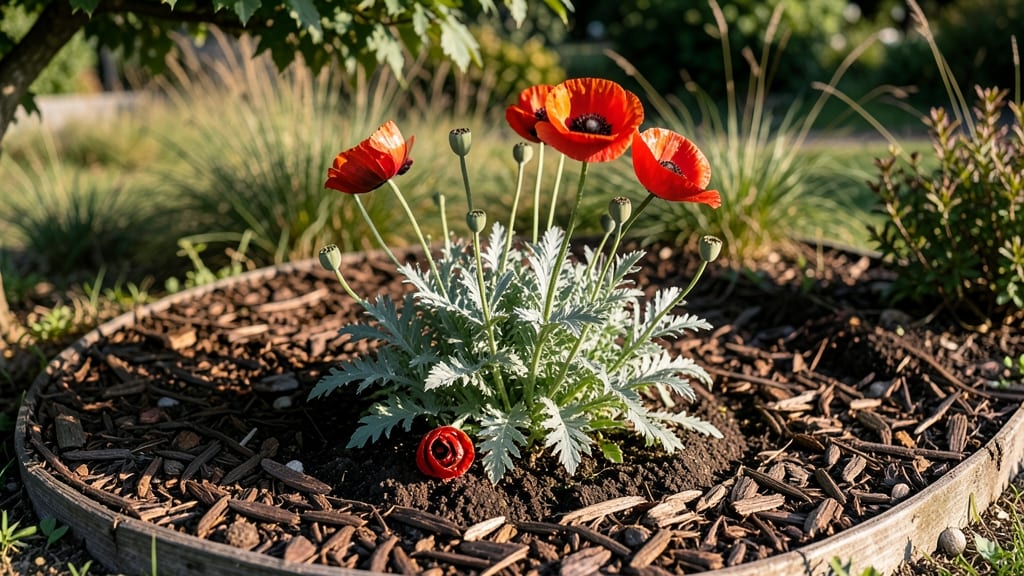
Poppies do grow in shade but need at least 4-6 hours of indirect sunlight daily for healthy growth. Varieties like Iceland poppies or Oriental poppies thrive in partial shade, while deep shade weakens stems and reduces blooms. Well-draining soil and gradual light exposure maximize success.
While poppies can adapt to shadier spots, they're not true shade plants—they simply tolerate limited light better than full sun alternatives. 🌿 The key is finding that sweet spot: too little light leads to pale, spindly stems and sparse flowers, while too much direct shade prevents them from photosynthesizing properly.
I've seen Iceland poppies (Papaver nudicaule) perform beautifully under dappled tree light, producing vibrant blooms even when other flowers struggle. For container growing, rotate pots weekly to ensure even light exposure on all sides.
If your garden has heavy shade, consider these shade-tolerant alternatives: California poppies (Eschscholzia) handle partial shade better than most, while bleeding hearts (Dicentra) offer similar delicate blooms with even less light.
The trick is to plant them where they'll get morning sun or filtered light through leaves—just enough to keep their metabolism happy without scorching.
💡 In This Article
- How Light Conditions Affect Poppy Growth and Blooming
- Shade-Tolerant Poppy Varieties and Planting Strategies
How light conditions affect poppy growth and blooming
Poppies rely on photosynthesis to convert light into energy, but their chlorophyll systems are optimized for moderate light—not deep shade. When exposed to less than 4-6 hours of indirect sunlight, poppies struggle to produce enough glucose for stem strength and flower development. 🌱 The result?
Leggy, weak stems that flop over and blooms that fail to open fully. This happens because shade reduces chlorophyll density, forcing the plant to stretch toward any available light—a process called etiolation.
Different poppy species have varying light thresholds. For example, California poppies (Eschscholzia) can handle 3-4 hours of morning sun with afternoon shade, while Oriental poppies (Papaver orientale) need 6+ hours of filtered light to prevent bolting (premature flowering).
The key is observing leaf color: healthy poppy leaves are deep green with a waxy sheen, while shade-stressed leaves turn pale yellow-green and feel thinner.
If your garden has dense shade, start poppies in a sunny spot and gradually move them to their permanent location over 2-3 weeks.
This process, called "hardening," helps the plants adjust their chlorophyll production. 💡 For container growing, place pots near a south-facing window (if indoors) or rotate them weekly to ensure even light exposure. Without this adjustment, poppies may bolt prematurely or produce only foliage with no flowers.
Temperature also plays a role. Poppies grown in cooler climates (50-65°F) can tolerate slightly more shade than those in hot regions (75-85°F), where direct sun stress becomes a bigger issue.
In hot shade, mulch with 2-3 inches of straw to insulate roots and retain moisture. The goal is to mimic their natural habitat—open meadows with dappled sunlight, not dense forest understory.
One surprising fact: poppies grown in partial shade often develop more vibrant flower colors due to reduced stress hormones. The anthocyanin pigments (responsible for red, pink, and purple hues) actually increase under moderate shade conditions, which is why shade-tolerant varieties like Iceland poppies produce such striking blooms.
However, this only works with indirect light—direct shade blocks these beneficial pigments entirely.
For the best results, monitor your poppies' response to light by checking their growth rate and flower production. If stems are longer than 12 inches with few buds, they're light-deprived. Adjust their position or consider a grow light for 4-6 hours daily during winter months when natural light is scarce.