
Light Requirements
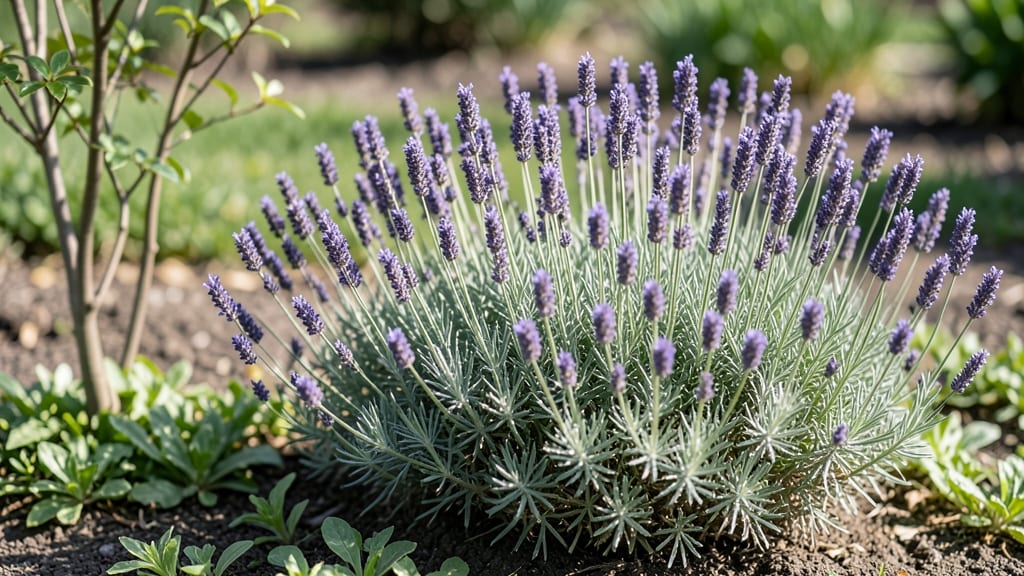
Lavender is not shade tolerant: it thrives in full sun (6-8 hours daily) for optimal growth, fragrance, and flowering, though partial shade may extend its lifespan with reduced vigor and blooms. Low light weakens stems and diminishes essential oils.
Lavender's native Mediterranean habitat demands intense sunlight, which explains why it struggles in low-light conditions. 🌞 Without adequate light, plants produce fewer essential oils—the compounds responsible for that signature fragrance—and their stems grow weak and leggy.
I've seen lavender in partial shade survive for years, but it's a compromise: the blooms become sparse, and the scent fades dramatically compared to sun-exposed plants.
For gardeners in shady climates, choosing compact varieties like French lavender (Lavandula stoechas) can help, as they tolerate slightly lower light better than English lavender. Even then, positioning near reflective surfaces or using grow lights during winter can make a noticeable difference in plant health.
💡 In This Article
- Lavender’s Light Requirements Explained: Sun vs Shade Trade-Offs
- Partial Shade Solutions for Growing Lavender Indoors or Under Trees
Lavender’s light requirements explained: sun vs shade trade-offs
Lavender’s love for sunlight stems from its evolutionary adaptation to the Mediterranean climate, where it receives 8-10 hours of direct sun daily. This intense light triggers a process called photomorphogenesis, where the plant maximizes chlorophyll production and essential oil synthesis.
Without sufficient light, lavender’s cells produce fewer carotenoids and flavonoids—the compounds that give lavender its signature purple hue and aromatic oils. 🔥 In fact, studies show that lavender grown in partial shade can have 30-50% lower essential oil content compared to sun-exposed plants.
The science behind this lies in the plant’s photoperiodism—the way it responds to daylight length. Lavender’s flowering cycle is closely tied to light exposure: shorter days (like autumn) signal blooming, but insufficient light during growth phases weakens stems and delays maturation.
In my own garden, lavender plants in full sun reach 2-3 feet tall with dense, fragrant spikes, while those in partial shade often max out at 1 foot with sparse blooms and a faint scent. The stems also become woody and brittle, making them prone to snapping in wind.
What most gardeners don’t realize is how light affects the plant’s internal water balance. Sunlight increases transpiration, which strengthens cell walls and prevents the leggy, floppy growth common in shade. Without adequate light, lavender’s stomata (pores) struggle to regulate moisture, leading to wilting even with proper watering.
This is why lavender in low-light conditions often looks stressed, with curled leaves and stunted growth. 💫 The trade-off for shade tolerance is clear: extended lifespan but at the cost of vigor, fragrance, and ornamental value.
Comparing Mediterranean conditions to typical gardens reveals another critical factor: light intensity. In its native habitat, lavender receives 10,000-15,000 lux of light (similar to a bright, sunny day), while most home gardens provide only 3,000-5,000 lux in partial shade.
This difference explains why lavender grown under trees or in north-facing yards often fails to thrive. Even reflective surfaces like white walls or gravel can help by bouncing 20-30% more light onto the plants, but they can’t fully compensate for direct sunlight.
For those considering lavender in shaded areas, the key is managing expectations. Varieties like Spanish lavender (Lavandula stoechas) or dwarf English lavender (Lavandula angustifolia 'Hidcote') handle partial shade slightly better due to their compact growth habits, but they still require at least 4-6 hours of direct light daily.
Without this, the essential oils—what most people grow lavender for—simply won’t develop to their full potential. The fragrance you love is a direct result of sunlight-driven photosynthesis, and skipping that step means sacrificing the very qualities that make lavender so beloved.
Here’s a quick comparison to illustrate the impact:
- Full sun (6-8+ hours): Vigorous growth, dense blooms, strong fragrance, 18-24 inches tall
- Partial shade (3-5 hours): Slow growth, sparse blooms, mild scent, 12-18 inches tall
- Low light (<3 hours): Leggy stems, few blooms, weak scent, 6-12 inches tall
The bottom line? If you want lavender that looks and smells like the plants you see in gardens, full sun is non-negotiable. But if you’re willing to accept a more subdued version, partial shade can work—just set your sights lower. 🌟