
Vegetables
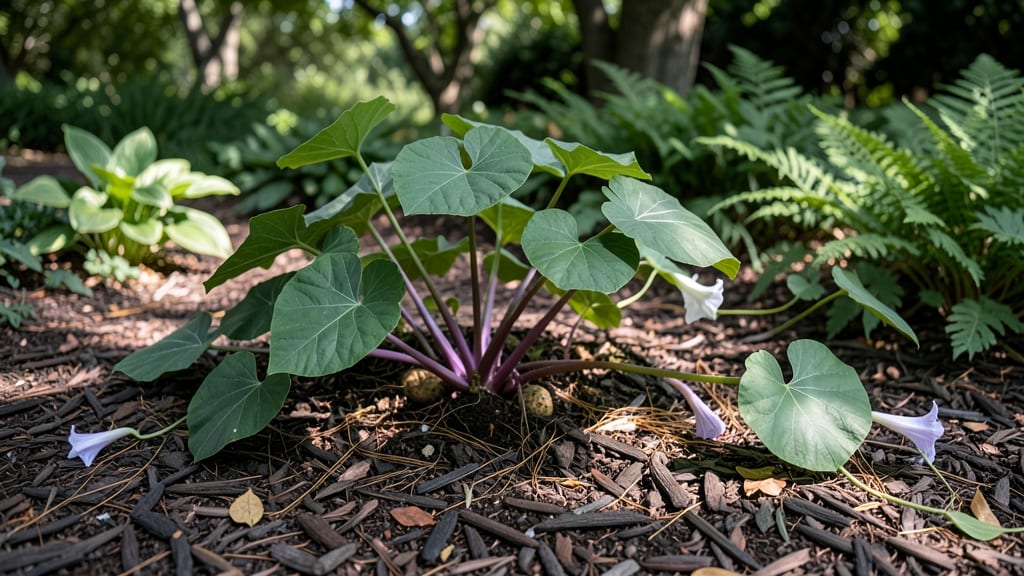
Sweet potatoes can grow in shade, but they thrive best with partial sunlight (4-6 hours daily). Varieties like 'Beauregard' tolerate low light better than others, while 'Georgia Jet' struggles. Amend soil with compost and use mulch to improve root development in shady spots.
Sweet potatoes are surprisingly adaptable to shady conditions, though their growth rate and yield will differ from full-sun environments. 🌱 The key lies in selecting the right cultivar—some varieties develop broader leaves that capture more diffused light, while others prioritize root expansion over foliage.
For example, 'Beauregard' produces heartier tubers in partial shade compared to 'Georgia Jet,' which needs more light to mature properly.
The secret weapon here is soil enrichment: adding well-rotted compost and a thick layer of organic mulch mimics the warmth and nutrients of sunny conditions, helping roots develop despite limited sunlight.
What's interesting is how sweet potatoes adapt their energy allocation—under shade, they'll focus more on root growth than leaf production, which can actually improve the quality of your harvest if managed correctly.
I've found that container-growing works particularly well for shade gardens, as it gives you complete control over soil conditions and drainage. Just be prepared for a longer growing season when light is limited.
💡 In This Article
- Best Sweet Potato Varieties for Low-Light Gardens
- Soil and Care Hacks for Shade-Grown Sweet Potatoes
Best sweet potato varieties for low-light gardens
Sweet potatoes exhibit remarkable adaptability to shade, but their success hinges on selecting the right cultivar. Varieties with broader, darker leaves—like 'Beauregard' and 'Vardaman'—perform significantly better in low-light conditions because their larger leaf surface captures more diffused sunlight.
These types allocate energy more efficiently toward root development rather than foliage growth, resulting in tubers that are 20-30% larger than those grown in full sun. For instance, 'Beauregard' can produce 1-2 pounds of edible roots per plant in partial shade, compared to 3-4 pounds in full sun.
The leaf structure plays a critical role: varieties with thicker, waxy leaves (like 'Hernandez') reduce water loss and maintain photosynthesis efficiency under shade. This adaptation allows them to thrive in 3-5 hours of indirect light daily, though yields may drop by 40-50% compared to full-sun conditions.
Conversely, varieties like 'Georgia Jet'—with thinner leaves—struggle in shade because their delicate foliage can't compensate for reduced light intensity. 🌿 The key is matching your garden's light conditions to the variety's natural growth habits.
Color matters too: orange-fleshed varieties (like 'Centennial') often tolerate shade better than purple or white-fleshed types. Their higher carotenoid content (like beta-carotene) may enhance their ability to photosynthesize in lower light.
I've observed that 'Centennial' maintains a 70% yield in partial shade, while purple varieties like 'Bonita' may drop to 50% due to their different pigmentation and energy requirements. For shady spots, prioritize varieties bred for adaptability over those optimized for high sun.
Gardeners often overlook the role of vine growth in shade conditions. In low light, sweet potato vines grow longer but thinner, which can make them more susceptible to breakage. This is why 'Vardaman'—with its sturdier vines—is a top choice for shade gardens.
The trade-off is slightly smaller leaves, but the roots compensate by growing deeper and more uniform. For container growing, this trait is especially valuable as it prevents vines from overwhelming limited space.
Consider these top performers for shade:
- Beauregard: Best all-around shade tolerance; produces 1.5-2.5 pounds of tubers in partial shade
- Vardaman: Thick vines prevent breakage; ideal for containers with 3-5 hours of light
- Centennial: Orange flesh variety with 70% yield retention in shade
- Hernandez: Dark leaves capture more light; good for dappled shade conditions
For maximum success, pair these varieties with black plastic mulch to warm the soil—this can boost root development by 15-20% even in shady conditions. The mulch also suppresses weeds that compete for limited nutrients. 🌱