
Blooming
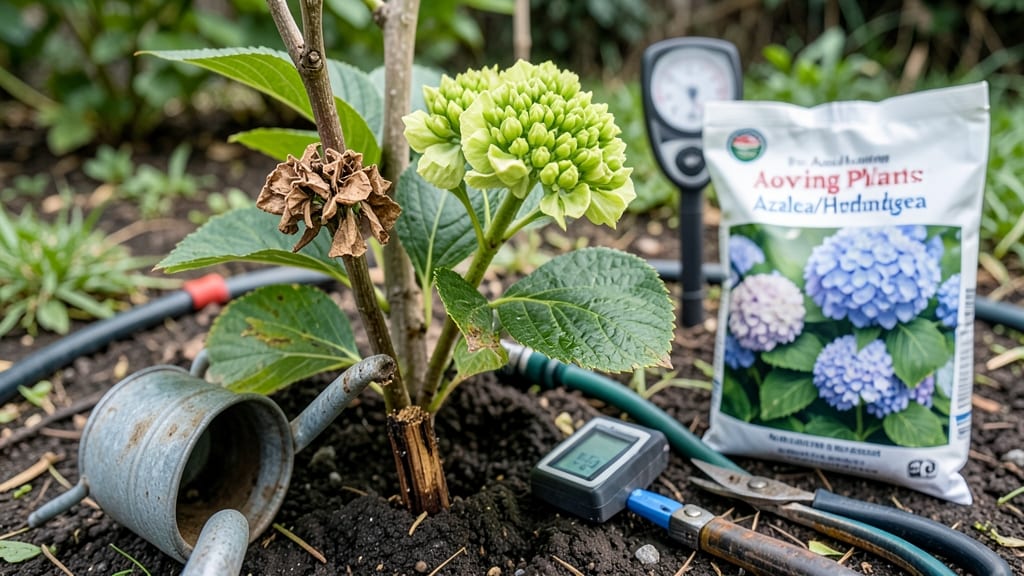
Why didn’t my hydrangea bloom this year? Those sneaky culprits could be sunlight, soil, or pruning—even if your plant looked healthy. 🌿 I’ve seen this happen more than I’d like, so let’s troubleshoot the real reasons behind those missing blooms.
Start by checking your plant’s light exposure: hydrangeas need 4-6 hours of morning sun (afternoon shade helps in hot climates). If the soil feels dry or compacted, roots can’t access nutrients like phosphorus and potassium—the bloom boosters.
And pruning at the wrong time (like summer) can cut off next year’s flower buds before they form.
Fix it by adjusting care now: move plants to sunnier spots, test soil pH (aim for 5.5-6.5), and fertilize with a balanced bloom booster.
For pruning, wait until late winter or early spring—just as buds start swelling. Most hydrangeas bounce back in a single season with these tweaks.
Prevent future disappointments by tracking sunlight hours, labeling pruning dates, and testing soil every spring. Once you nail these basics, you’ll get vibrant blooms that last from summer through fall. Let’s get those buds back next year!
Hidden Reasons Your Hydrangeas Skipped Blooms
Hydrangeas are the divas of the garden—dramatic, lush, and full of personality—but even they can throw a tantrum by refusing to bloom. 🌸🤨 The reasons behind their no-show blooms often boil down to a mix of environmental stress, cultural mistakes, or biological quirks.
Let’s break down the science behind why your hydrangeas might have played dead this year, so you can troubleshoot like a pro.
Hydrangeas (Hydrangea macrophylla, H. paniculata, and H. arborescens) are light-hungry plants, but they’re not all created equal. Bigleaf hydrangeas (macrophylla) thrive in partial shade (3–6 hours of direct sun), while panicle and oakleaf varieties (paniculata/arborescens) crave full sun (6+ hours) to set buds.
Why it happens:
- Bigleaf hydrangeas in too much sun (especially hot, dry climates) can scorch leaves, reducing energy for blooms. Their buds form on old wood, but stress from heat or drought signals the plant to prioritize survival over flowers.
- Panicle/oakleaf hydrangeas in shade struggle because they require sunlight to trigger bud formation on new growth. Without it, the plant focuses on foliage instead.
- Late-season shade (e.g., tall trees casting shadows in summer) can also prevent bud initiation before winter.
Actionable fix:
- Test your spot: Use a light meter or observe shadows—if your hydrangea gets <3 hours of sun, it’s likely the culprit.
- Adjust pruning: Thin nearby trees or relocate the plant to a morning sun/afternoon shade spot for bigleaf types.
- Mulch deeply: A 3-inch layer of mulch retains moisture, helping plants cope with heat stress.
Hydrangeas are thirsty but sensitive—too much or too little water, plus poor soil nutrition, can halt bloom production by disrupting root health and nutrient uptake.
Why it happens:
- Drought stress: Hydrangeas need consistent moisture, especially during bud formation (late summer/early fall). Wilting or crispy leaves signal the plant to conserve energy, often at the expense of flowers.
- Overwatering/poor drainage: Root rot from soggy soil starves the plant of oxygen, leading to weak growth and no blooms. Hydrangeas hate "wet feet."
- Nitrogen overload: Too much nitrogen (from fresh manure or synthetic fertilizers) promotes leafy growth but stunts flowers. Hydrangeas need a balanced ratio (e.g., 10-10-10 or 5-10-5) with more phosphorus (P) for blooms.
- Micronutrient deficiencies: Iron, magnesium, or boron deficiencies can prevent bud development. Yellowing leaves (chlorosis) or blackened buds are red flags.
Actionable fix:
- Water deeply 1–2x/week (1–1.5 inches per week), more in extreme heat. Use drip irrigation to avoid wetting foliage (fungus risk).
- Test your soil: A pH test (hydrangeas prefer 5.2–6.2) and soil test (check for P, K, and micronutrients) can reveal imbalances.
- Feed right: Use a low-nitrogen, high-phosphorus fertilizer (like 10-20-10) in early spring and mid-summer. Avoid high-nitrogen lawn fertilizers.
- Amend soil: Mix in compost or peat moss to improve drainage and acidity.
Pruning is both an art and a science—mess it up, and your hydrangea will either bloom late, not at all, or produce only leaves.
Why it happens:
- Pruning old wood too late: Bigleaf hydrangeas (macrophylla) set buds on last year’s wood in late summer/fall. If you prune in early spring, you remove next year’s blooms before they form.
- Pruning new wood at the wrong time: Panicle/oakleaf hydrangeas bloom on current year’s growth. Pruning them too early (winter/early spring) cuts off potential flower buds.
- Over-pruning: Cutting back more than 1/3 of the plant stresses it, diverting energy away from blooms.
- Shearing instead of selective pruning: Topping or hedging encourages weak, leafy growth with few flowers.
Actionable fix:
- Bigleaf hydrangeas: Wait until after blooming (late summer/fall) to prune. Remove dead/diseased stems and thin out crowded branches to improve airflow.
- Panicle/oakleaf hydrangeas: Prune in late winter/early spring to shape the plant—they’ll produce flowers on new growth.
- Avoid summer pruning: Trimming in summer can stimulate new growth that won’t harden off before winter, leading to fewer or weaker blooms next year.
Hydrangeas are sensitive to temperature swings, especially during bud formation and bloom time.
Why it happens:
- Late spring frost: If buds form in fall/winter but a hard freeze hits in spring, flowers won’t open or will burn.
- Heatwaves in summer: Temperatures above 90°F (32°C) can stress the plant, causing buds to abort before opening.
- Winter dieback: In cold climates, young or weak plants may lose buds to frost, leading to sparse blooming.
Actionable fix:
- Protect buds: Cover plants with frost cloth during late frosts or mulch heavily in winter.
- Choose cold-hardy varieties: Panicle hydrangeas (e.g., ‘Limelight’) and oakleaf hydrangeas tolerate cold better than bigleaf types.
- Water in heatwaves: Deep watering helps plants cooler roots and retain moisture during heat stress.
Hidden pests and pathogens can weaken your hydrangea so much that it prioritizes survival over flowers.
Why it happens:
- Aphids, spider mites, or scale: These sap-suckers stress the plant, causing yellowing leaves and reduced energy for blooms.
- Powdery mildew or leaf spot: Fungal infections clog stomata, preventing nutrient uptake and bud development.
- Root rot (Phytophthora): Soggy soil leads to root decay, starving the plant of water and nutrients.
- Japanese beetles: They devour petals and leaves, leaving the plant too weak to bloom.
Actionable fix:
- Inspect leaves/stems: Look for holes, webbing, or white powdery residue.
- Treat early: Use neem oil (for pests) or fungicide (for mildew) at the first sign of trouble.
- Improve airflow: Prune for spacing and avoid overhead watering to prevent fungal growth.
Sometimes, your hydrangea just isn’t ready—or it’s the wrong type for your goals.
Why it happens:
- Young plants: Hydrangeas often take 2–3 years to mature enough to bloom heavily.
- Re-blooming vs. once-blooming: Bigleaf hydrangeas bloom on old wood (spring) and may struggle to re-bloom if pruned incorrectly. Panicle/oakleaf types bloom on new wood and can re-bloom if pruned early.
- Dormancy cycles: Some varieties require a cold period to trigger blooming. In mild winters, they may skip flowering.
Actionable fix:
- Be patient: If your hydrangea is <3 years old, it may just need time.
- Choose the right variety: For re-blooming, pick panicle or oakleaf types (e.g., ‘Endless Summer
Revive Your Hydrangea’s Blooms Now
Don’t let this season’s disappointment become next year’s regret! With the right fixes, your hydrangea can bounce back—and even thrive—next blooming season.
Below, we’ve mapped out practical, step-by-step solutions for the most common reasons your hydrangea skipped its floral show, plus prevention tips to keep it blooming beautifully for years to come.
Problem: Too much shade or scorching sun stresses plants, halting blooms. Solution:
- 🔍 Assess sunlight: Hydrangeas need morning sun + afternoon shade (4–6 hours daily). If your plant is in deep shade, move it to a bright, indirect spot (e.g., near a north- or east-facing window or under dappled tree shade).
- 🌿 Adjust gradually: If relocating, do it over 2–3 weeks to avoid shock.
- 🌞 For too much sun: Provide afternoon shade with a sheer curtain or nearby foliage.
💡 Prevention Tip: Plant hydrangeas where they’ll get consistent light from the start—avoid hot, west-facing spots in summer.
Problem: Hydrangeas are pH divas—too acidic or alkaline = no blooms. Solution:
- 📊 Test your soil: Use a $10 soil pH kit (or send a sample to a local extension office). Hydrangeas prefer:
- Blue blooms: pH 5.2–5.5 (acidic)
- Pink blooms: pH 6.0–6.2 (slightly acidic)
- Purple blooms: pH 5.5–5.8 (neutral-leaning acidic)
- 🔄 Adjust pH fast:
- To lower pH (more acid): Mix sulfur or peat moss into the soil (follow package rates).
- To raise pH (less acid): Add lime (but sparingly—hydrangeas hate alkaline soil).
- 💧 Flush with rainwater: Tap water can alter pH; use rainwater or distilled water for watering.
💡 Prevention Tip: Mulch annually with pine needles or oak leaves to naturally acidify soil over time.
Problem: Over-pruning, wrong timing, or neglecting deadheads = missed blooms. Solution:
- 📅 Prune at the right time:
- Old wood bloomers (e.g., Hydrangea macrophylla): Prune right after blooming (late summer/early fall). Cut back 1/3 of the oldest stems to encourage new growth.
- New wood bloomers (e.g., Hydrangea paniculata): Prune in late winter/early spring before buds swell. Trim dead or weak stems to the base.
- 🚫 Avoid these mistakes:
- Never prune blooming stems on old-wood types—you’ll cut off next year’s flowers!
- Don’t shear hydrangeas like a hedge—sharp cuts encourage bushier growth.
- 🌿 Revive leggy plants: If your hydrangea looks sparse, prune 1/4 of the oldest stems to redirect energy to new blooms.
💡 Prevention Tip: Label your hydrangea type and keep a pruning calendar to avoid confusion.
Problem: Hydrangeas hate drought or soggy roots—both can stop blooms. Solution:
- 🌧️ Check moisture:
- Stick your finger 1–2 inches into soil. If dry, water deeply (1–2 gallons per plant).
- If soil stays soggy for days, improve drainage by mixing compost or perlite into the soil.
- 💦 Watering hacks:
- Morning watering prevents fungal issues (hydrangeas hate wet leaves at night).
- Use mulch (2–3 inches of shredded bark) to retain moisture and regulate temperature.
- 🚫 Avoid overhead sprinklers: They can stain petals and promote mildew.
💡 Prevention Tip: Group hydrangeas with thirsty pals (like hostas or ferns) to create a micro-climate that stays evenly moist.
Problem: Aphids, spider mites, or fungal diseases (like powdery mildew) drain energy from blooms. Solution:
- 🐜 Spot the culprit:
- Aphids/mites: Tiny webs or sticky residue on leaves.
- Powdery mildew: White fuzzy coating on stems/leaves.
- 🛡️ Treat naturally:
- Pests: Spray with neem oil or insecticidal soap (repeat weekly for 2 weeks).
- Fungus: Apply baking soda spray (1 tsp baking soda + 1 quart water + drop of soap) every 7–10 days.
- 🌿 Prevent future outbreaks:
- Space plants for airflow (hydrangeas need 3–5 feet between neighbors).
- Clean up debris in fall to remove overwintering pests.
💡 Prevention Tip: Inspect leaves weekly during growing season—early action = easier fixes!
Problem: Over-fertilizing = leafy growth, no blooms. Under-fertilizing = weak stems. Solution:
- 📊 Feed right:
- Use a balanced fertilizer (10-10-10) early spring (when new growth starts).
- For more blooms, switch to a phosphorus-rich formula (like 5-10-5) mid-summer.
- 🚫 Avoid these mistakes:
- Never fertilize dormant plants (winter/late fall).
- Slow-release granules are better than liquid—hydrangeas hate sudden nutrient spikes.
- 💧 Flush the soil: If you’ve over-fertilized, water deeply to leach excess salts.
💡 Prevention Tip: Test soil every 2–3 years—hydrangeas in container pots need annual feeding.
Problem: Crowded roots or small pots = stressed plants = no energy for blooms. Solution:
- 🏺 For potted hydrangeas:
- Check roots: If circling the pot, it’s time to repot (spring is best).
- Upgrade size: Move to a container 2–3 inches larger with well-draining soil.
- 🌿 For in-ground plants:
- Loosen soil around roots if compacted (add compost to aerate).
- Mulch heavily (4 inches) to encourage root expansion.
💡 Prevention Tip: Repot every 2–3 years and use pots with drainage holes—hydrangeas hate soggy feet!
🎉 Ready to see blooms next season? Start with one or two fixes this month (e.g., prune + adjust pH), then tackle the rest over time. Hydrangeas are forgiving—with a little TLC, your plant will thank you with a showstopping display come summer!
Frequently asked questions
My hydrangea leaves look healthy, but there are no buds at all—what could be wrong?
Check your pruning timing! Bigleaf hydrangeas (macrophylla) form buds on old wood in late summer/fall. If you pruned in early spring, you likely removed next year's flower buds. For panicle/oakleaf types, prune in late winter/early spring—they bloom on new growth. Also verify sunlight: these varieties need 6+ hours of sun.
Can I still get blooms this year if I pruned at the wrong time?
Possibly! If you pruned too late, check for small green buds on stems—these may still develop into flowers. For bigleaf types, avoid cutting back more than 1/3 of the plant this year. Focus on watering deeply (1-2 gallons weekly) and applying a phosphorus-rich fertilizer (5-10-5) to encourage new bud formation.
Why did my hydrangea bloom last year but not this year?
Common culprits include drought stress (hydrangeas need consistent moisture, especially during bud formation in late summer), nutrient deficiencies (test soil pH—ideal range is 5.2-6.2), or pest damage (check for aphids or spider mites). Also verify if nearby trees now cast more shade—hydrangeas often bloom less in low-light conditions.
How do I know if my hydrangea is getting enough sunlight?
Use the shadow test: Place a stake in the ground where your hydrangea sits and mark shadows every hour. If your plant gets less than 4 hours of direct sun daily, it's likely the issue. Bigleaf types tolerate morning sun + afternoon shade, while panicle/oakleaf varieties need full sun (6+ hours). Move plants gradually if relocating.
Will fertilizer help if my hydrangea didn't bloom?
Yes—but use the right type! Hydrangeas need phosphorus (P) for blooms, not just nitrogen (which promotes leaves). Apply a balanced 10-10-10 fertilizer in early spring, then switch to a phosphorus-heavy 5-10-5 in mid-summer when buds form. Avoid high-nitrogen lawn fertilizers, which can prevent flowering. Always water thoroughly after applying.